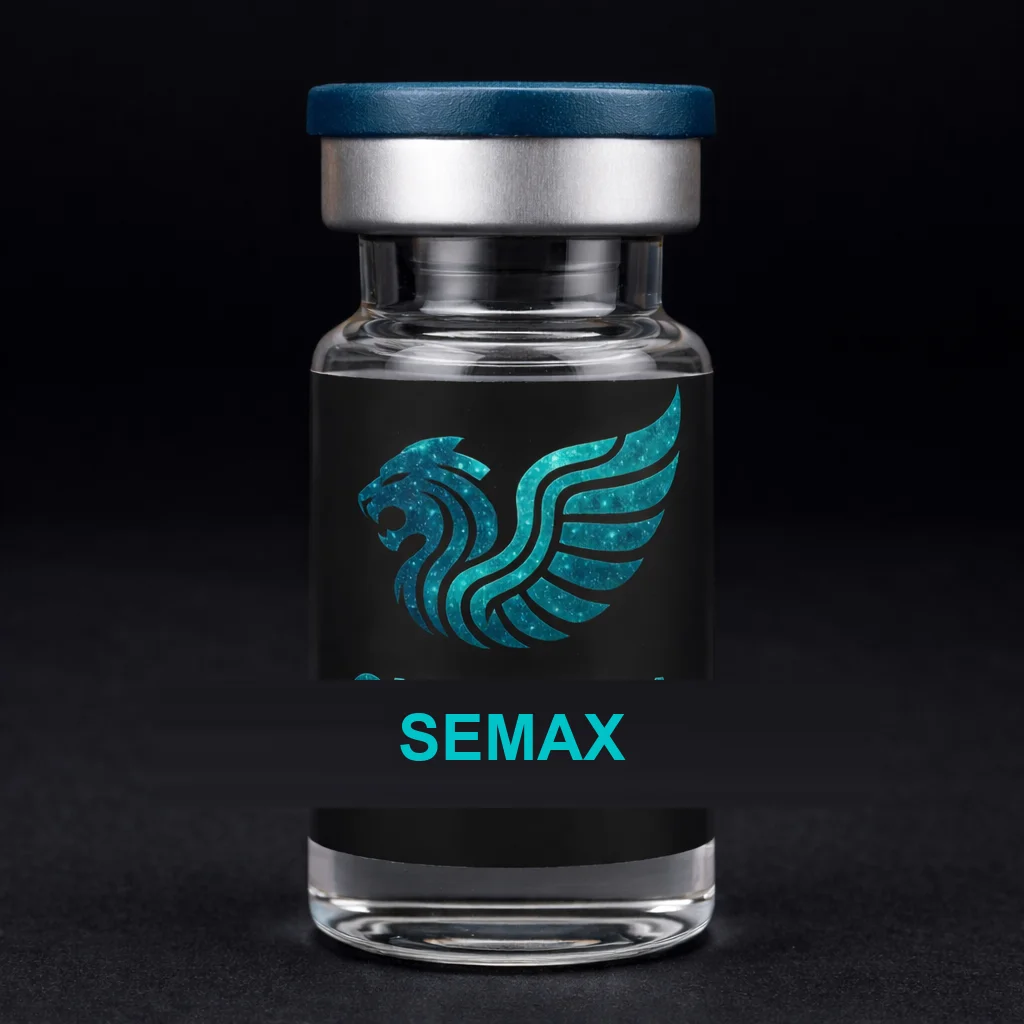

Semax peptide laboratory product information
Semax appears in the cognitive enhancement research compounds catalog at Chimera Peptides. It is a synthetic peptide derived from an ACTH-related sequence and extended with a Pro-Gly-Pro segment, with the page structured to help researchers identify the product, select a listed option and plan suitable controls.
Research questions
Researchers may use Semax when designing comparisons around neurobiology, peptide signaling, oxidative-stress models, and cognition-related preclinical research. The page does not predict outcomes; it identifies the material and the questions that may guide responsible study design. Because published models can use different formats, the product label and protocol-specific calculations should remain the controlling references.
Selecting the correct format
Use the listed options to distinguish Semax formats. Do not calculate from the product name alone when the page offers more than one amount or package size.
- 11 mg x 10vials
- 5mg x 10vials
Material-control notes
For Semax, confirm the exact name, listed amount, material form and lot details before preparation. Sequence or analogue terminology should remain consistent across the label, inventory and assay file. Review any applicable material in the COA library, and do not assume that a certificate for another lot represents the item received.
Readers reviewing Semax who need a general definition can consult the external Peptide overview. Product-specific decisions must still rely on the listing, label and matching documentation.
Explore related listings
- DSIP — compare its identity, format and pathway relevance with Semax before selecting materials.
- Epithalon — compare its identity, format and pathway relevance with Semax before selecting materials.
For a practical Semax catalog comparison, review DSIP and Epithalon. Compare molecular or formulation identity, listed specification and relevance to the planned endpoint rather than choosing solely by category name.
Use restriction
Semax is not for human or veterinary use. This catalog entry supports analytical and educational research only and must not be treated as medical or consumer-product guidance.
| Select Specification |
|---|
Related products

Cognitive Enhancement

Cognitive Enhancement
Cognitive Enhancement

Cognitive Enhancement